Connected evidence controls
A clearer review surface for the quality team
Each capability contributes to the same organisation-scoped history rather than
producing another isolated record.
- Equipment context
- Asset identity stays distinct from time-bounded deployment history, recurring requirements and completed work.
- Controlled methods
- Versioned procedures save completed steps immediately and resume at the next unresolved task.
- Metrological traceability
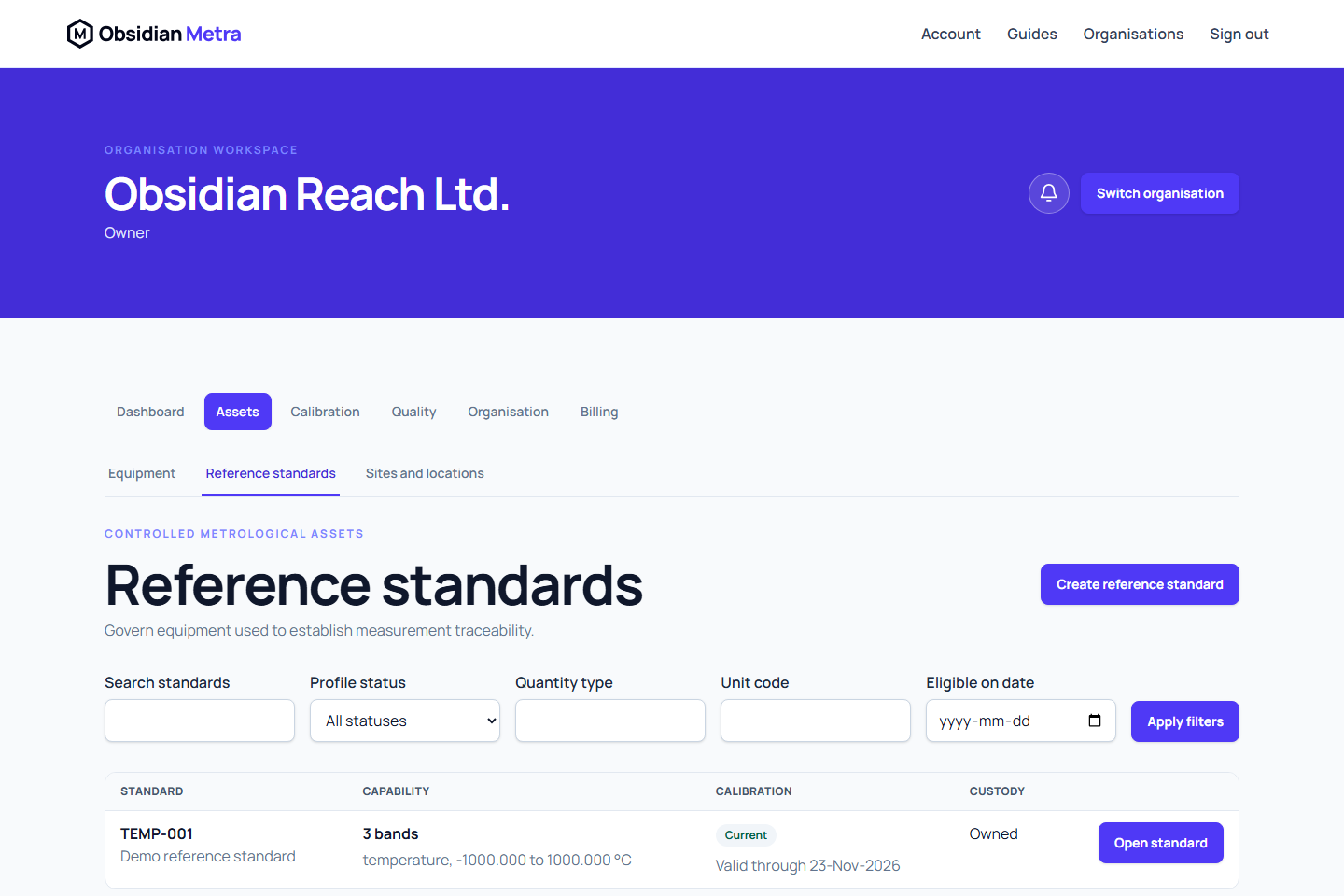
- Reference standards carry capability, calibration state, certificates, restrictions and traceability information.
- Measurement uncertainty
- Versioned Type A and Type B budgets retain calculation inputs, combined uncertainty and expanded uncertainty.
- Decision evidence
- Controlled decision rules connect tolerances, uncertainty, guard bands and boundary policy to the reported outcome.
- Controlled certificates
- Procedure-defined readiness, independent signed approval, sequential numbering and accreditation-scope checks freeze the evidence behind each generated revision.
- Competence evidence
- Personnel authorisations and controlled evidence records help reviewers understand who was permitted to perform or approve work.
- Nonconforming work
- Out-of-tolerance investigations keep impact, containment, root cause, disposition and corrective action connected to the triggering result.
- Audit scope
- Dossier revisions freeze the selected client or internal sites, date range and included evidence without altering source records.