
Explain the acceptance decision
Preserve why it passed or failed
Connect measured error, tolerance, uncertainty, guard band and boundary policy. Approved evidence keeps the exact uncertainty budget and decision-rule revisions used at the time.
Medical device measurement control
Connect equipment control across development, production and quality operations, with the method, evidence and review history behind every calibration result.
Across the operating lifecycle
Control laboratory and engineering equipment while methods and products evolve.
Keep recurring calibration requirements and due work visible across sites.
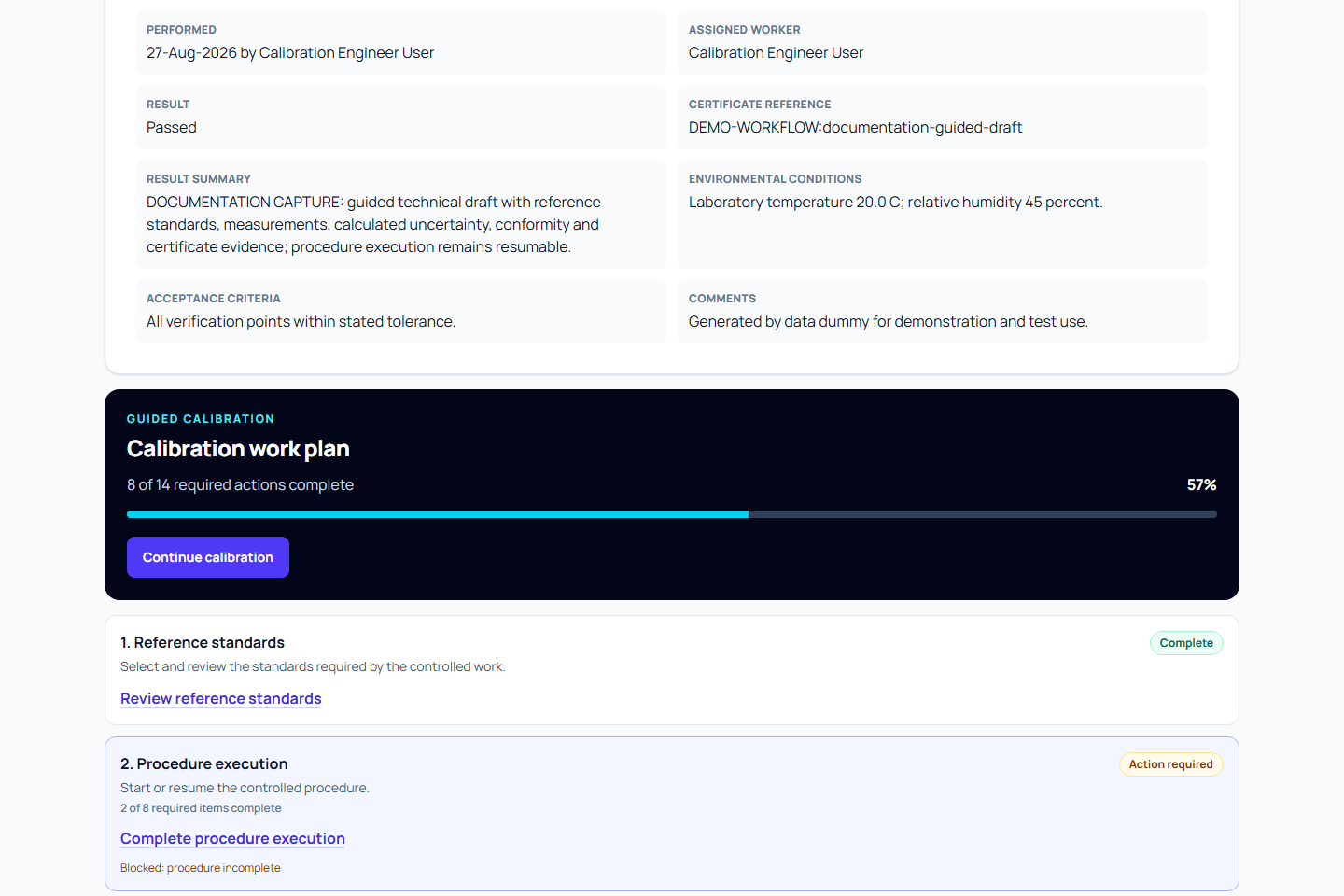
Guide controlled work and preserve the technical basis for acceptance decisions.
Connect failed calibration to impact assessment, containment and corrective action.
Present scoped equipment and calibration evidence with its provenance intact.
Controlled methods
Start with a readable controlled method, reveal advanced evidence controls only where they apply, and hand the completed revision to an independent reviewer before use.
Explore procedure guides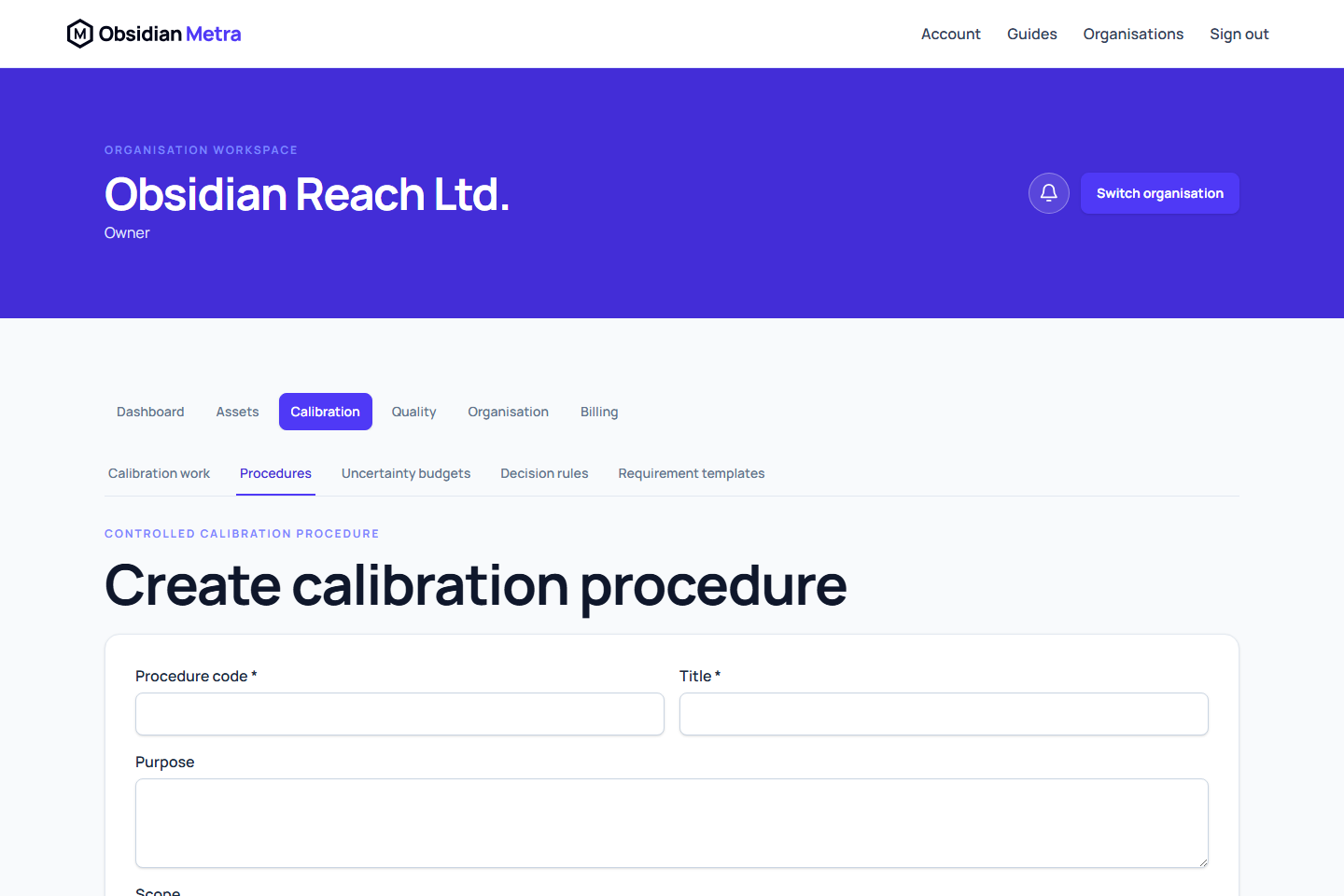
Explain the acceptance decision
Connect measured error, tolerance, uncertainty, guard band and boundary policy. Approved evidence keeps the exact uncertainty budget and decision-rule revisions used at the time.
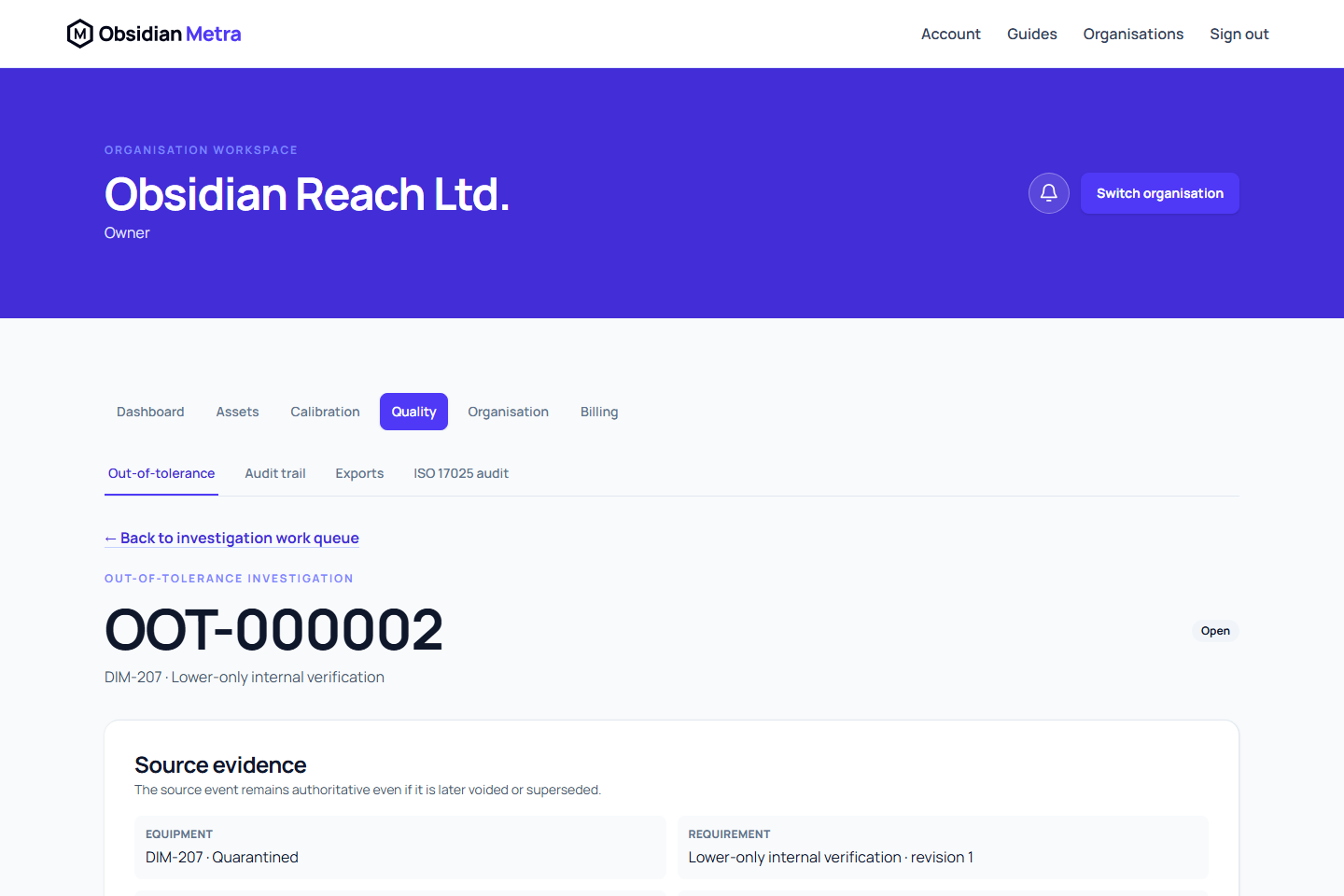
Nonconforming work
Structured investigations record impact, containment, root cause, disposition and corrective action against the result that triggered review, preserving a coherent quality history.
Records with provenance
Permissions and memberships control who can perform, review, approve and export work.
Controlled records use revision, supersession and append-only audit history rather than silent replacement.
Retain certificate metadata and replacement history beside calibration events.
Freeze selected sites, dates and evidence into a reviewable audit revision.
See how Metra turns recurring calibration work into structured, reviewable evidence.
Obsidian Metra does not confer FDA, MDR or ISO 13485 compliance, validate customer processes, or make product-release decisions. Your organisation remains responsible for validation, regulatory obligations and professional judgement.