Reference standards overview
For the difference between calibration, verification and traceability, read Calibration and traceability.
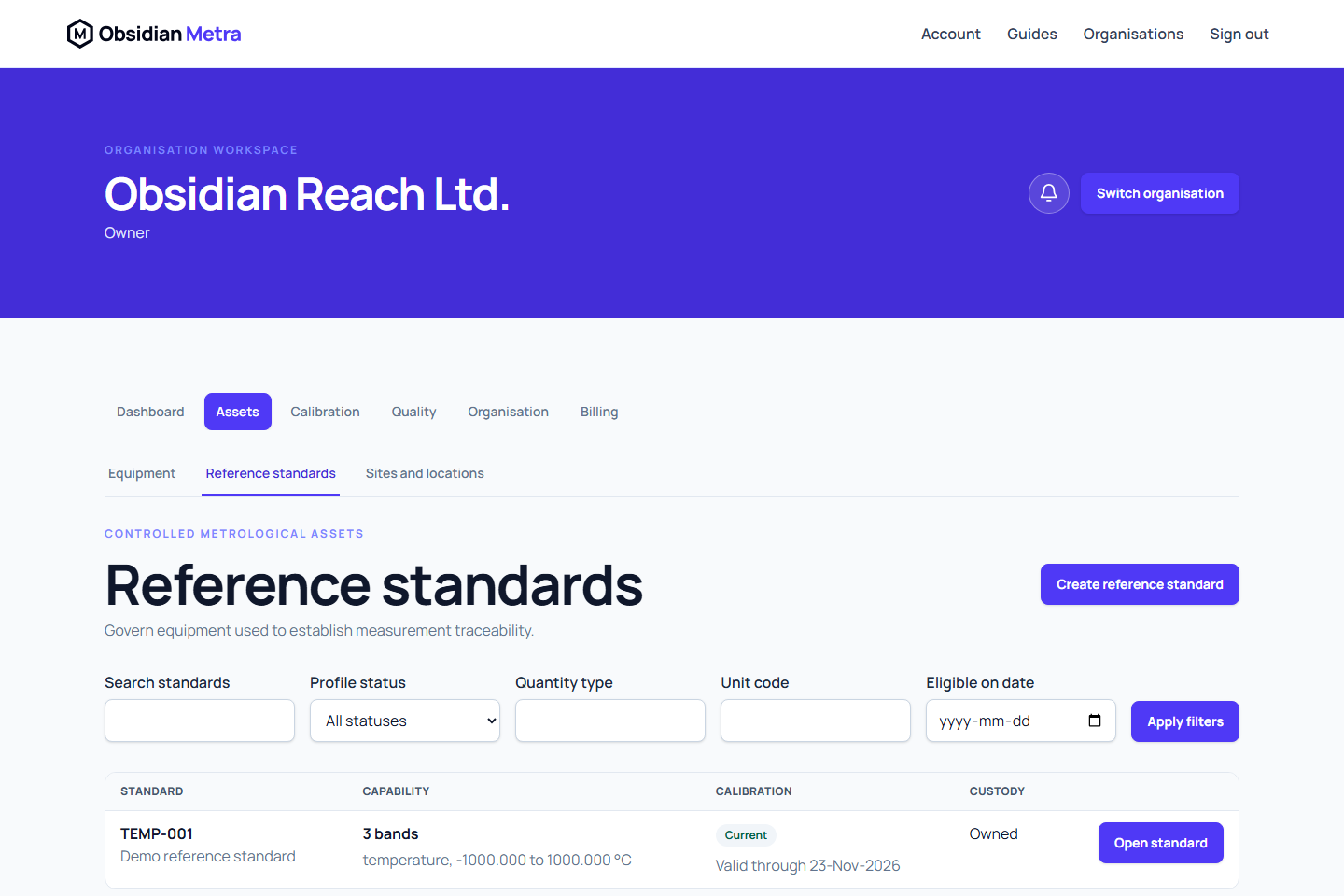
A reference standard is a controlled equipment record used to support calibration measurements. It keeps the asset identity, movement history, calibration events, certificates, capability bands, restrictions, accreditation evidence, and traceability assessment connected.
What Metra evaluates
Metra evaluates a selected standard on the calibration work date, not today's date. The assessment checks the approved source calibration, retained certificate, inclusive expiry date, equipment status, quantity, unit, range, uncertainty, restrictions, and upstream traceability.
The API returns Eligible, Warning, or Prohibited with reason-coded findings. A controlled exception does not change a prohibited result; it records why an authorised manager allowed the use and requires approval acknowledgement.
Traceability outcomes
- Complete means every applicable branch reached an accepted terminal with the required structural evidence.
- Complete with warnings means the chain completes but needs reviewer attention.
- Incomplete means required evidence or a terminal is missing.
- Compromised means retained upstream evidence was later invalidated.
- Unassessed identifies work that has not yet been evaluated under structured reference usage.
A complete chain is evidence completeness, not an automatic claim of ISO/IEC 17025 conformity or accreditation.